You have an idea. It’s more than just an idea; it’s a feeling, a message, a brand identity that you know would look perfect on a t-shirt. Maybe it’s for your startup that’s finally taking off, a local event that needs a unifying symbol, or an online store you’ve been dreaming of launching. You can almost feel the soft cotton and see the vibrant print. But then, the doubt creeps in. You start searching online, and you’re immediately overwhelmed. What’s the difference between screen printing and DTG? Why are some custom t-shirts $5 and others $25? How do you ensure the design in your head is what actually shows up at your door?
I’ve been in your exact shoes. A few years ago, I was managing a project for a small non-profit. We wanted to create custom t-shirts to sell at a fundraiser—something people would actually want to wear. We went with the cheapest online option we could find. The result? The colors were faded, the fabric felt like sandpaper after one wash, and half the order was misprinted. We wasted hundreds of dollars and, more importantly, we lost the opportunity to make our supporters feel proud. That experience taught me a crucial lesson: creating exceptional custom t-shirts isn’t about finding the cheapest price; it’s about finding the right partner and understanding the process.
This guide is the resource I wish I had back then. We’re going to pull back the curtain on the entire world of custom apparel. We’ll dive deep into design trends, demystify the printing technology, and show you how to choose a supplier that acts as a partner, not just a printer. By the end of this, you won’t just know how to order custom t-shirts; you’ll know how to create wearable art that connects with people and achieves your goals.
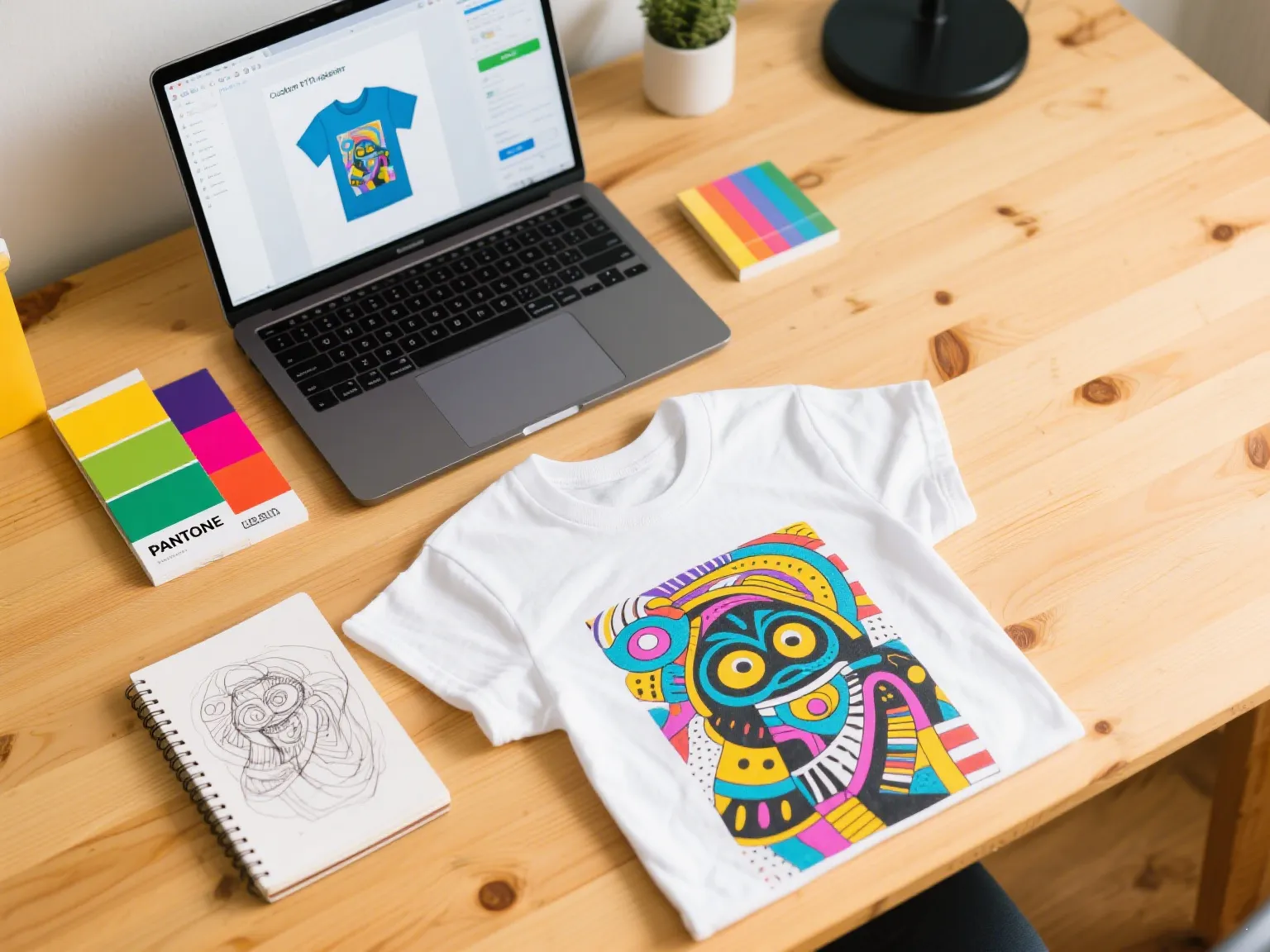
Why Custom T-Shirts Are More Than Just Apparel in 2025
The global market for custom t-shirt printing is exploding, projected to reach over $9 billion by the end of 2025 according to a report from Grand View Research (nofollow). This isn’t just a fleeting trend; it’s a fundamental shift in how we think about clothing. People are tired of generic, mass-produced fashion. They crave authenticity and connection. A t-shirt is a canvas, and a custom design turns it into a statement.
For businesses, it’s one of the most effective marketing tools available. A study by the Advertising Specialty Institute found that a promotional t-shirt gets an average of 3,400 impressions throughout its lifetime. It’s a walking billboard that your customers choose to wear. For artists and creators, it’s a way to monetize their passion and build a community. For individuals, it’s about celebrating moments—family reunions, bachelor parties, charity runs.
The pain point most people encounter is the gap between their vision and the final product. That’s where understanding the landscape becomes critical. You need a partner who can bridge that gap. As a direct POD (Print-on-Demand) factory supplier, we at Loongwa Print see this every day. We help creators avoid the pitfalls of poor quality and hidden costs by giving them direct access to the manufacturing process, ensuring what they design is exactly what they get.
Step 1: Nailing Your Design – Trends and Principles for 2025
A great t-shirt starts with a great design. But “great” doesn’t have to mean “complicated.” In 2025, the most impactful designs are often a blend of nostalgia, minimalism, and personality.
Tap into Winning Design Trends
Your design will have more impact if it aligns with current cultural currents. Based on recent market analysis and social media trends, here’s what’s resonating right now:
-
Y2K and Retro Futurism: Think bold, bubbly fonts, metallic or chrome effects, and a sense of playful optimism. This trend is huge with Gen Z and taps into a longing for a simpler, more colorful past.
-
Minimalist Line Art: Simple, elegant line drawings of faces, nature, or abstract shapes continue to dominate. They are sophisticated, easy to print, and appeal to a broad audience. Searches for “minimalist graphic tees” are up 40% year-over-year.
-
Nature and Eco-Consciousness: Designs featuring botanicals, wildlife, and environmental messages are more popular than ever. As consumers become more eco-aware, they want their clothing to reflect their values. This is especially powerful if you use eco-friendly custom t-shirts.
-
Bold Typography: Sometimes, words are all you need. A clever phrase, a powerful statement, or a humorous quote in a striking font can be incredibly effective.
The Technical Side of Design – Getting Your File Right
This is where many newcomers stumble. To ensure your print is crisp and clear, your design file needs to be high quality.
-
Resolution is King: Your image should be at least 300 DPI (Dots Per Inch) at the final print size. A low-resolution image from the internet will look pixelated and blurry when printed on a shirt.
-
Vector vs. Raster: For most designs, especially those with solid colors and text (like logos), a vector file (.AI, .EPS, .SVG) is ideal. It can be scaled to any size without losing quality. For photographic or highly detailed images, a high-resolution raster file (.PNG with a transparent background) is the way to go.
-
Color Mode: Ensure your design is in CMYK color mode, not RGB. RGB is for screens; CMYK is for printing. Designing in CMYK from the start prevents unexpected color shifts in the final product.
If this sounds intimidating, don’t worry. A good supplier can help. At Loongwa Print, our online design tool automatically flags low-resolution images, and our team of experts can assist with file conversions to ensure your design is print-ready.
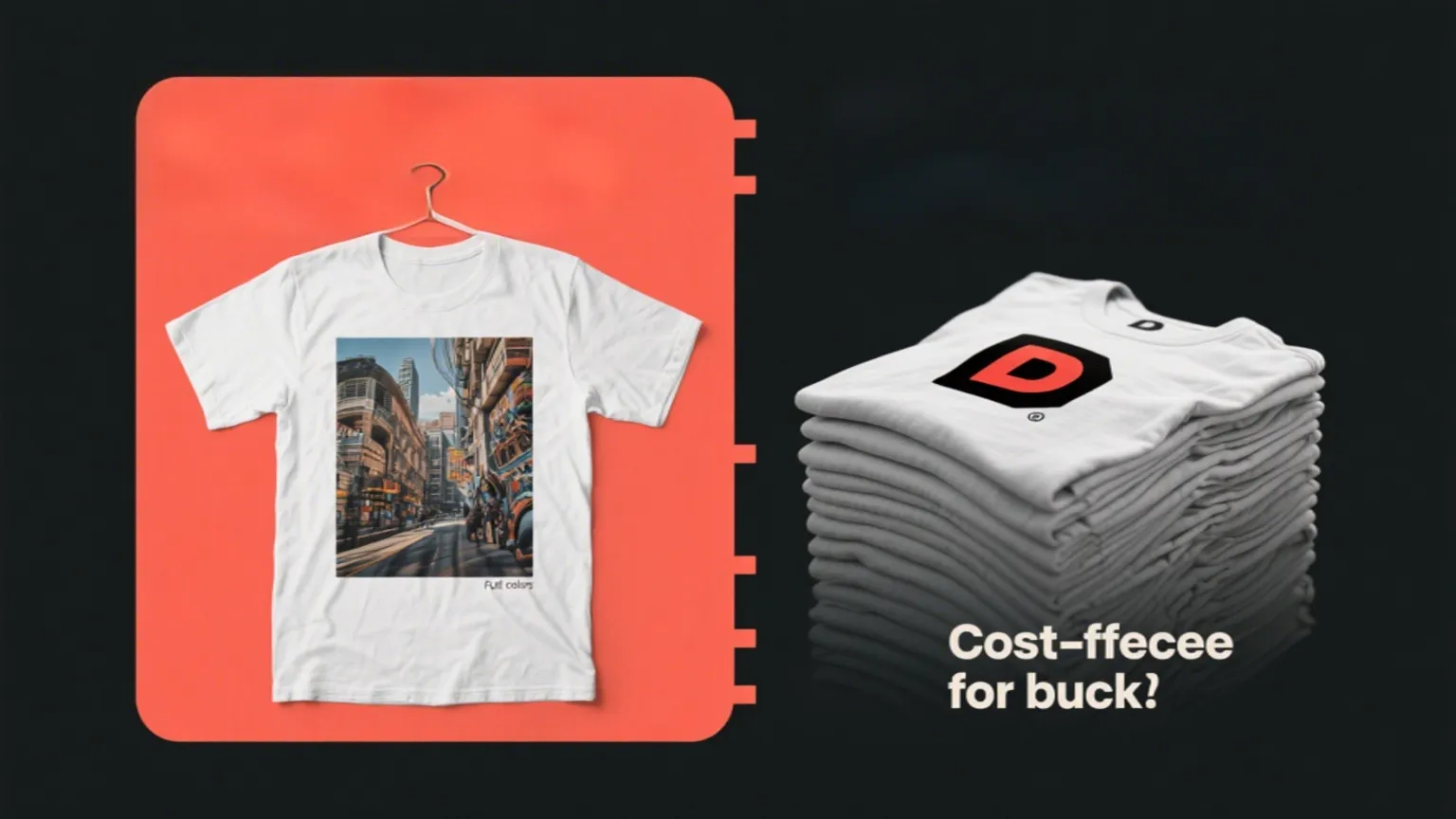
Step 2: Choosing Your Printing Method: A Breakdown for 2025
The technology used to print your design has a massive impact on the final look, feel, and cost. Let’s break down the two most popular methods so you can make an informed choice.
Screen Printing – The Durable Workhorse for Bulk Orders
Screen printing is the traditional, time-tested method. It involves creating a stencil (or “screen”) for each color in your design and pushing ink through it onto the fabric.
-
Best For: Simple designs with a limited number of colors (ideally 1-4). It truly shines for ordering custom t-shirts in bulk (typically 24 or more).
-
Pros:
-
Durability: The ink penetrates the fabric, creating a print that is incredibly durable and can last for years.
-
Vibrant Colors: Screen printing produces bright, opaque colors that pop, especially on dark-colored garments.
-
Cost-Effective at Scale: The more you print, the lower the cost per shirt, as the initial setup cost is spread across the entire order.
-
-
Cons:
-
Not Ideal for Small Orders: The setup process makes it expensive for just a few shirts.
-
Limited Detail: It struggles to reproduce photographic details or complex color gradients.
-
Case Study: A local brewery I worked with needed 200 shirts for a festival. Their logo was a simple two-color design. By choosing screen printing, they were able to get their per-shirt cost down to under $7, and the prints looked fantastic and held up through a long, busy weekend.
Direct-to-Garment (DTG) – The Detail-Oriented Choice for Modern Designs
DTG printing is like using a giant inkjet printer for fabric. It sprays water-based inks directly onto the t-shirt, allowing for highly detailed, full-color designs.
-
Best For: Complex, photographic, or multi-colored designs. It’s also perfect for small batches or even single, one-off prints.
-
Pros:
-
Unlimited Colors & Detail: DTG can reproduce millions of colors, gradients, and fine details with stunning accuracy.
-
No Minimum Order: Since there are no screens to set up, you can print just one shirt affordably. This is the technology that powers the Print-on-Demand model.
-
Soft Feel: The water-based inks bond with the fabric, resulting in a much softer feel than some thick screen prints.
-
-
Cons:
-
Less Cost-Effective for Bulk: The per-shirt cost remains relatively constant, so it can be more expensive than screen printing for large orders.
-
Best on 100% Cotton: While technology is improving, DTG works best on natural fabrics like 100% cotton.
-
Case Study: An independent artist wanted to sell her intricate watercolor paintings as t-shirts on her Etsy store. DTG was the only option. It allowed her to offer her entire portfolio without holding any inventory. When an order came in, we printed a single custom t-shirt and shipped it directly to her customer. This zero-risk model is a game-changer for creators.
Step 3: Selecting the Perfect T-Shirt – Fabric, Fit, and Feel
The best design in the world will fall flat on a poor-quality t-shirt. The garment you choose is just as important as the print.
Fabric Matters Most
-
100% Ringspun Cotton: This is the gold standard for softness and comfort. “Ringspun” means the cotton fibers are twisted and thinned, creating a stronger, much softer yarn than standard cotton. It’s the perfect canvas for a premium feel.
-
Tri-Blends (Cotton/Polyester/Rayon): This is the magic formula for an incredibly soft, lightweight, and drapey t-shirt with a vintage feel. The polyester helps it hold its shape, the cotton provides comfort, and the rayon gives it a unique texture.
-
Eco-Friendly Options: Sustainability is no longer a niche request; it’s a demand. Look for options like organic cotton (grown without pesticides) or fabrics made from recycled materials. Offering eco-friendly custom t-shirts can be a powerful selling point. A report by NielsenIQ (nofollow) shows that over 70% of consumers are willing to pay more for sustainable products.
Finding the Right Fit
-
Unisex/Men’s Fit: The classic, straight-cut t-shirt. It’s a reliable choice that works for a wide range of body types.
-
Women’s Fit: Typically more tapered at the waist with shorter sleeves for a more contoured look.
-
Fashion Fits: Think beyond the basics. Options like oversized “streetwear” fits, cropped tees, or long-sleeve shirts can elevate your design and appeal to specific audiences.
When you’re choosing a custom t-shirt supplier, look for one that provides detailed spec sheets for their garments, including measurements. This helps you and your customers choose the right size and reduces the chance of returns.
Step 4: Choosing Your Supplier – The Factory-Direct Advantage
This is the final and most critical piece of the puzzle. Your choice of supplier will determine the quality of your product, your pricing, and your overall experience. You generally have two options: a reseller/marketplace or a direct factory supplier.
A reseller acts as a middleman. They take your order and then send it to a factory like ours to be produced. While they can be convenient, their model inherently adds a markup to the final price.
Working directly with a POD factory supplier like Loongwa Print cuts out that middleman. This factory-direct model provides several key advantages:
-
Better Pricing: By eliminating the reseller’s margin, you get access to wholesale-level pricing, even on smaller orders. This is crucial for maximizing your profit if you plan to sell your shirts.
-
Greater Quality Control: When you work directly with the people printing your shirts, there’s a direct line of communication. You have more control over the final product and can trust that quality standards are being met.
-
Expertise and Support: A factory team has deep technical knowledge. They can provide expert advice on which printing method is best for your design, help optimize your artwork, and troubleshoot any potential issues before they become problems.
Your Vision, Printed with Passion
Creating custom t-shirts should be an exciting and rewarding process, not a frustrating one. By understanding the key elements—a strong design, the right printing technology, a quality garment, and a true production partner—you can confidently bring your vision to life.
You’re no longer just ordering a piece of clothing. You’re crafting a message, building a brand, and creating something that will be worn and loved. That initial idea you had? It’s ready to become a reality. Take the leap, and start creating something amazing today.
Frequently Asked Questions (FAQ)
What is the best file format for a custom t-shirt design?
For most designs, especially logos or graphics with solid colors, a vector file (.SVG, .AI, .EPS) is best because it can be resized without losing quality. For photos or complex, detailed art, a high-resolution (300 DPI) .PNG file with a transparent background is the ideal choice.
How can I make sure the colors on my t-shirt look right?
To ensure color accuracy, design your file in CMYK color mode, which is the standard for printing. Also, be aware that colors can look slightly different on a backlit screen versus a printed fabric. A good supplier can provide a digital mockup that gives a close representation of the final product.
What is the most durable printing method for t-shirts?
Screen printing is generally considered the most durable method for t-shirt printing. The ink seeps into the fabric, creating a bond that can withstand many washes without cracking or fading, making it ideal for uniforms or workwear.
Can I order just one custom t-shirt?
Yes! Thanks to Direct-to-Garment (DTG) printing technology, there are no minimum order requirements. This is perfect for creating a single unique gift, testing a design before committing to a larger batch, or running a Print-on-Demand business.
How do I care for my custom t-shirts to make the print last?
To maximize the life of your print, wash your t-shirts inside out in cold water on a gentle cycle. Tumble dry on low heat or, for best results, hang them to dry. Avoid using bleach or ironing directly on the design.